
Nigeria TV Info
Published: April 18, 2026
By Nigeria TV Info
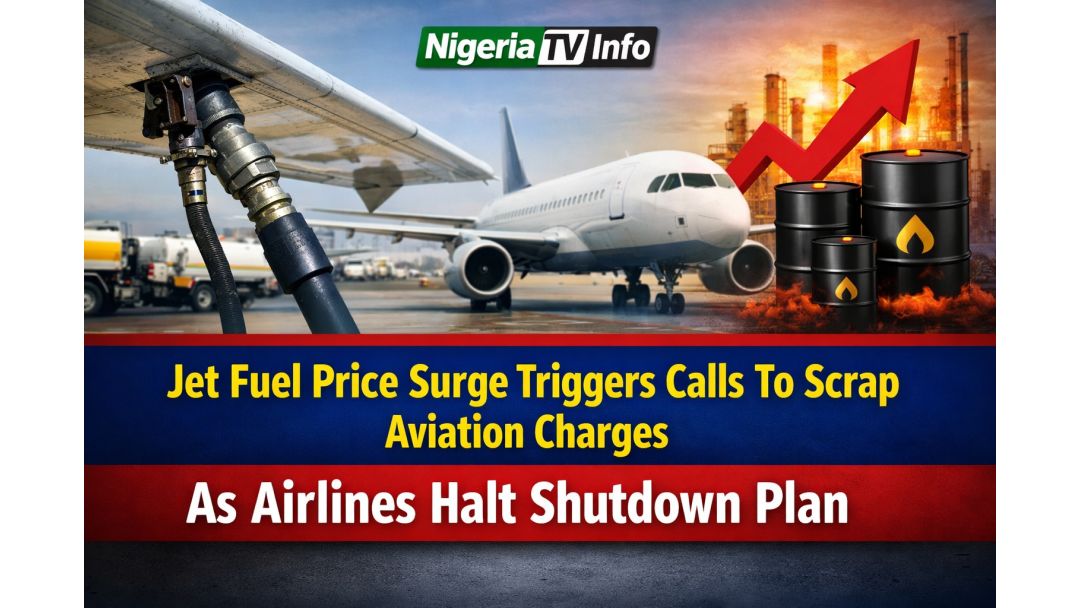
Nigeria’s aviation sector is facing mounting pressure as escalating jet fuel prices threaten the sustainability of airline operations, prompting urgent calls for government intervention.
Industry analysts and key stakeholders have raised concerns that the situation could worsen if immediate action is not taken to ease the financial burden on airline operators.
Airlines Warn of Possible Shutdown
Airline operators have warned that they may be forced to suspend all flight operations starting April 20 if current cost pressures persist. The sharp increase in jet fuel prices has significantly driven up operational expenses, leaving many carriers struggling to remain viable.
Experts caution that without intervention, airlines may have no choice but to transfer these rising costs to passengers, resulting in higher ticket prices and reduced accessibility to air travel.
Government Charges Under Scrutiny
Analysts revealed that approximately 35 percent of airfare in Nigeria consists of government-imposed charges, a factor they say is compounding the crisis.
Stakeholders are urging the Ministry of Aviation to take immediate steps by directing the Federal Airports Authority of Nigeria (FAAN) and other regulatory agencies to reduce or temporarily suspend levies and taxes imposed on domestic airlines and flight tickets.
Proposed Relief Measures
To stabilize the sector, experts recommend a temporary relief window of at least three months, during which:
- Aviation-related taxes and charges should be reduced or suspended
- Operational costs for local airlines should be eased
- Government agencies should provide policy support to sustain airline businesses
They argue that such measures would not only prevent a potential shutdown but also support long-term growth and stability in Nigeria’s aviation industry.
Industry Outlook
Without swift government action, the aviation sector risks deeper instability, which could lead to reduced flight operations, job losses, and broader economic implications.
Observers emphasize that proactive intervention is critical to maintaining airline operations, protecting passengers from fare hikes, and ensuring the continued growth of Nigeria’s aviation sector.
Conclusion
The rising cost of jet fuel has once again exposed structural challenges within Nigeria’s aviation industry. As the April 20 deadline looms, stakeholders are calling for decisive government action to prevent disruption and safeguard the future of air travel in the country.
Comments